
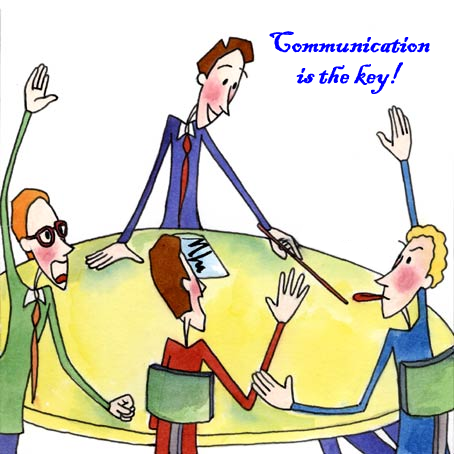
The communicative language teaching is an approach of a second-foreign language in which interaction is one of the most important activities that have to be developed by the students.
There can be implied different activities to fulfill with the CLT competences. For example, practicing questions by interacting and asking to students to find out personal information. The teacher has to be concerned that there are questions that will not be useful for the student in long-term, so that’s why it’s necessary that classes are according to the needs of the student.
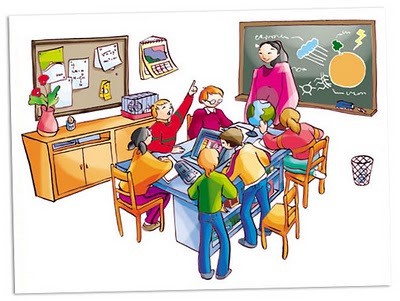
It can be really useful and can have a great impact in a lot of students that find hard to express themselves by just writing. Grammar is not all they need to learn a foreign language.
The practice time can be with all levels, at any place.
A child is able to produce an infinite number of sentences that s/he has never encountered. This makes the factors of imitation, repetition and habit formation weak arguments to account for any language learning theory.
For Chomsky the focus of linguistics was to describe the linguistic competence that enables speakers to produce grammatically correct sentences. Dell Hymes held, however, that such a view of linguistic theory was sterile and that it failed to picture all the aspects of language. He advocated the need of a theory that incorporate communication competence. It must be a definition of what a speaker needs to know in order to be communicatively competent in a speech community.
Later Canale and Swaine (1980) described four dimensions of communicative competence.
- Grammatical competence: refers to what Chomsky calls linguistic competence.
- Sociolinguistic competence: refers to an understanding of the social context in which communication takes place (role relationships, shared beliefs and information between participants …)
- Discourse competence: refers to the interpretation of individual message elements in terms of their interconnectedness and how meaning is represented in relationship to the entire discourse or text.
Strategic competence: refers to the coping strategies that participants use to initiate terminate, maintain, repair and redirect communication

 Teaching Methods